
The Equity Struggle for Women’s Health
The Equity Struggle for Women’s Health: Why the Ultimate Solution Starts Long Before the Prescription
It has been over half a century since the second-wave feminist movement altered the cultural landscape, yet when it comes to the clinical reality of women’s health, true equity remains an unreached frontier. Women once metaphorically burned their bras for bodily autonomy and equal rights, but today, an entirely different kind of quiet revolution is brewing. Women are fighting for baseline physical literacy, demanding modern medical testing, and struggling to gain access to proper preventative care while navigating a conventional healthcare system that is structurally stuck behind the times.
To understand how women’s health became a landscape of trial and error—marred by years of preventable infertility, silent miscarriages, failed IVF attempts, and high abortion rates—we must look back at our history. But more importantly, we must expose the single greatest root cause of this systemic failure: the chronic, deliberate sheltering of girls and women from the deep education of their own bodies.
🔴 Live Class Notice
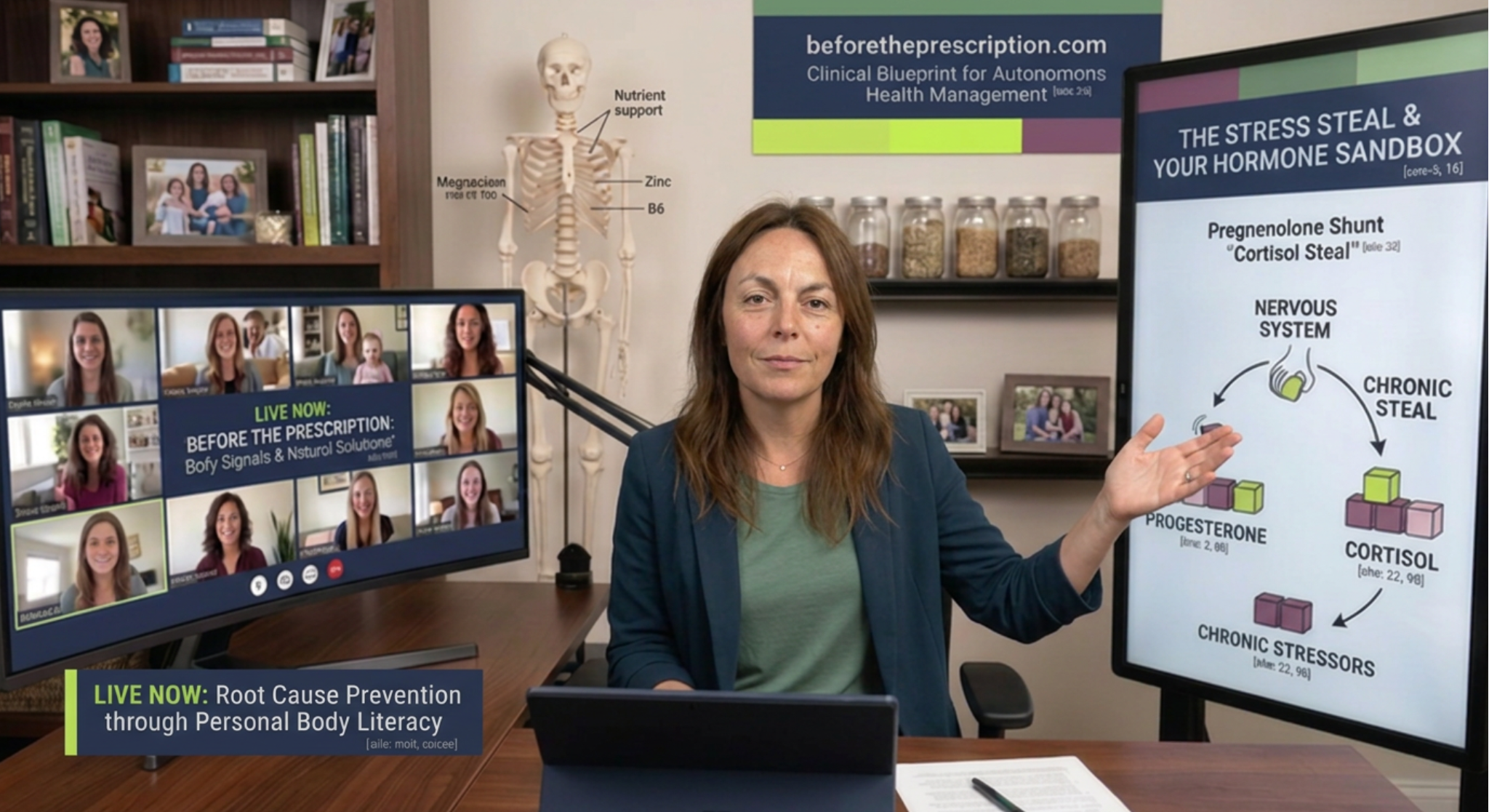
Root-Cause Prevention Through Personal Body Literacy: Join Dr. Millie Lytle live online to decode your body's interconnected signals and access evidence-based natural solutions before turning to HRT. Dr Millie will be using Mira Hormone Monitor to track her own cycle, and to educate the viewers. All attendees will be provided with a SymptoThermal Tracking Sheet.
A Timeline of Autonomy: The Landmark Dates of Women's Health
The trajectory of women’s healthcare has been defined by hard-fought legal and pharmaceutical milestones. However, each victory has carried an ironic double-edged sword.
1960: The FDA approves the first oral contraceptive pill. It is hailed as the ultimate tool of liberation, but it is restricted exclusively to married women.
1972: In the landmark Eisenstadt v. Baird decision, the Supreme Court extends the legal right to possess contraceptives to unmarried individuals, fundamentally shifting reproductive autonomy.
1973: Roe v. Wade establishes a constitutional right to abortion, inserting a legal framework around a woman's reproductive choices.
2002: The Women's Health Initiative (WHI) study lands with a devastating thud. Synthetic hormone replacement therapy (HRT) is abruptly tied to increased risks of strokes, blood clots, and breast cancer, prompting the FDA to issue severe Black Box warnings. Overnight, an entire generation of physicians pulls millions of women off HRT, plunging them into sudden, unmanaged menopausal symptoms and accelerated bone loss.
2022: The Supreme Court overturns Roe v. Wade, ending nearly fifty years of constitutional abortion protections and instantly throwing reproductive healthcare into a chaotic patchwork of state-by-state litigation.
2023: The FDA approves the first over-the-counter daily birth control pill, highlighting a reactionary push to expand pharmaceutical access as traditional clinical options shrink.
2026: The FDA has officially removed its sweeping cardiovascular, breast cancer, and dementia black box warnings for women starting HRT early in their transition (before age 60 or within 10 years of menopause onset). For this group, the data now formally recognizes clear benefits for symptom relief, bone density, and heart protection without the severe risks previously stated.
Note: The warning for endometrial cancer remains strictly for systemic, estrogen-alone products used by women who still have a uterus—which is why estrogen is routinely paired with progesterone to protect the uterine lining.
The Double-Edged Sword of Hormonal Control
There is no denying that widespread access to birth control and Hormone Replacement Therapy (HRT) represents a monumental victory for women’s autonomy. Reliable contraception has allowed generations of women to pursue education, command their careers, and plan their families on their own terms. Similarly, modern HRT offers profound relief from debilitating menopausal symptoms, protecting cardiovascular and bone health as women transition into maturity. These pharmaceutical innovations are invaluable tools for reproductive freedom and quality of life.
However, a massive clinical blind spot emerges when we mistake chemical symptom management for true physiological optimization.
This issue is particularly acute for women in their peak fertile years. Culturally, women have been conditioned to believe their reproductive systems function like an on/off switch—that they can suppress their natural cycles on oral contraceptives for a decade, stop taking the Pill, and seamlessly achieve pregnancy within a year.
In reality, conventional hormonal birth control doesn't regulate a cycle; it completely shuts down the communication loop between the brain and the ovaries (the HPG axis). When a woman decides she is ready to conceive, she often inherits a sluggish endocrine system that has forgotten how to ovulate, masking years of underlying insulin resistance, thyroid stagnation, or progesterone deficiencies.
This biochemical whiplash has been severely compounded by recent political and legal shifts. As changing laws restrict predictable reproductive healthcare, there has been a massive spike in the overuse of emergency contraception, like Plan B. Stranded by systemic panic, many women are defaulting to these massive, high-dose synthetic progestin pills as a primary, recurring method of birth control.
Flooding the female body with recurrent, high-dose pharmaceutical surges throws delicate endocrine feedback loops into total chaos. It suppresses ovulation unpredictably, depletes vital nutrients, and leaves women entirely in the dark about their actual baseline fertility.
True, proactive fertility management—and the eventual transition to a healthy pregnancy—cannot rely on a continuous cycle of pharmaceutical emergencies or prolonged ovarian suppression. Ironically, the most powerful tool a woman possesses is the one the current system rarely teaches: personal body literacy.
When a woman is deeply educated on her unique biochemistry, tracking her natural fertile windows, and decoding her metabolic signals, that self-knowledge yields massive long-term benefits for her fertility. It preserves her native endocrine rhythm and protects her delicate biological baseline, ensuring that when she is ready to transition to pregnancy, her body is already primed to thrive.
This is exactly why women’s self-knowledge must be prioritized. A woman’s understanding of her own function cannot be phased by the constant whiplash of political decision-making, changing supreme court rulings, or shifting state laws. When you own the data on your own body, your health authority is entirely yours—no matter which way the political winds blow.
The Cart Before the Horse: The Commercialized Diagnosis
Nowhere is the backward nature of modern medicine more evident than in the recent shift surrounding Polycystic Ovary Syndrome (PCOS). There is a massive clinical push to rename this condition to PMOS (Metabolic and Ovulatory Syndrome) to more accurately reflect that it is fundamentally a metabolic and insulin-driven disorder, not an ovarian disease.
However, medical history shows that it will take years for this single condition to filter into modern clinical language and standard physician treatment plans. Why? Because of a highly ironic truth in modern medicine: when you finally have a highly profitable drug for something, you suddenly start diagnosing it. The mad scramble for GLP-1 medications (like Ozempic and Mounjaro) has single-handedly expedited the cultural and medical shift toward validating insulin resistance in women. Instead of investigating the physical root cause out of clinical empathy, the system accelerated the diagnosis because it finally found a blockbuster pharmaceutical vehicle to monetize. In modern medicine, the drug dictates the disease, rather than the other way around.
The True Root Cause: Education Beginning in Puberty
If women were truly given medical equity, their healthcare wouldn't consist of a decades-long game of blind trial and error. Millions of women spend their prime reproductive years suffering through unvetted infertility, devastating miscarriages, and emotionally exhausting IVF failures because conventional medicine treats reproduction as a black box until it breaks.
The true root cause of women's health equity is education on our own bodies. This education cannot wait until a woman is sitting in an infertility clinic at age 35, or suffering severe night sweats at age 48. It must begin in puberty, high school, and college. We also cannot talk about this lack of literacy without confronting the current political landscape. In recent years, we have witnessed a highly damaging capture of basic human biology. Conventional systems have politicized reproductive education, reframing the simple study of human physiology as a controversial "child protection" issue. By wrapping basic hormonal literacy, ovulation mapping, and endocrine function in a shroud of political debate, the medical and educational systems have effectively scared schools, communities, and institutions into silence.
The tragic consequence of this polarization is that we have chosen to shelter young women from the very mechanics of their own bodies, leaving them to step into adulthood biologically blind.
But true biological education is not a political threat; it is the ultimate family empowerment tool. When you teach a young girl the exact biochemical signals of her cycle, you are not introducing a controversial ideology. You are handing her the keys to her own health. You are empowering her to recognize the difference between a normal metabolic shift and a system in distress. You are equipping a future mother, a future partner, and a future household health leader with the data she needs to prevent years of quiet suffering, unvetted depletions, and pharmaceutical dependency.
If young girls were taught to read their cyclical body signals as a fluid, interconnected biochemical map, the landscape of women's health would completely transform:
The Reproductive Dynamic: If young women understood ovulation as a vital sign of health rather than just a mechanism for pregnancy, we wouldn't mask every minor teenage cycle irregularity with a synthetic birth control pill that suppresses their baseline development.
The Abortion Crisis: If girls were deeply educated early on about their precise fertile windows and dynamic hormonal shifts, the societal burden of unwanted or unexpected pregnancies would dramatically decrease. True prevention stems from body literacy, not just access to a daily pill.
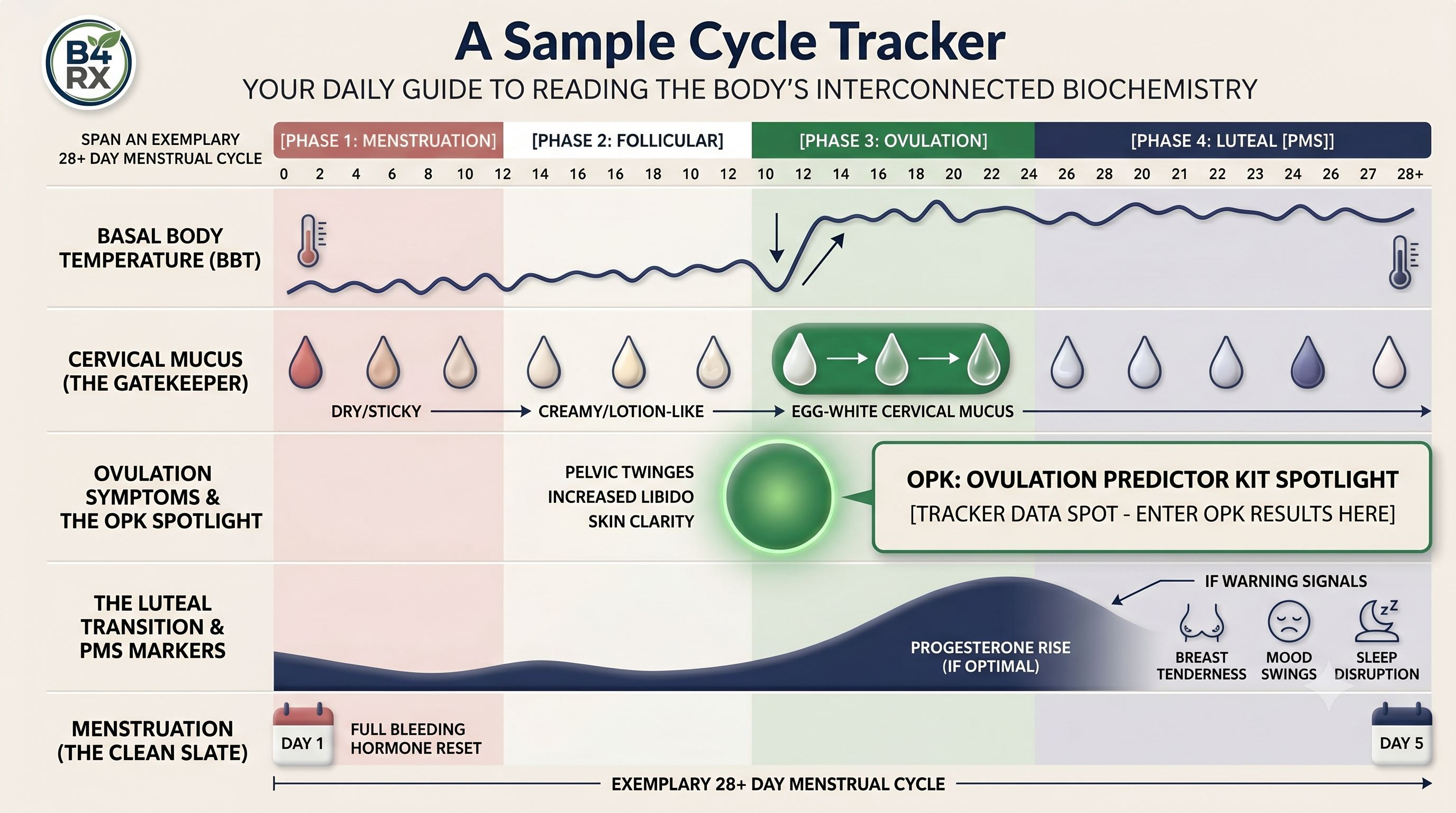
Stop treating your cycle as a mystery. True prevention and proactive fertility management start with education. When you can decode your signs of fertility and infertility, you know exactly where you stand in your cycle every single day—giving you the ultimate health authority, no matter which way the political winds blow.
Perimenopause, Prevention, and the Retraining Gap
Today, Hormone Replacement Therapy (HRT) is experiencing a massive cultural resurgence. But it isn't returning because of a broad, systemic retraining of conventional doctors. It is returning because a select group of dedicated functional medicine practitioners and direct online voices are bypassing a broken medical system to speak straight to women.
The unfortunate reality is that a vast portion of conventional physicians are still spreading decades-old misinformation regarding the safety of HRT. They are still practicing under the shadow of the deeply flawed 2002 Women's Health Initiative (WHI) study, leaving women completely stranded during their most vulnerable hormonal transitions.
When a woman in her late 30s or 40s enters a conventional clinic with the early signs of a progesterone plunge, her dropping numbers are routinely ignored. Instead, she is dismissed with lazy platitudes: "It’s just stress," or "It’s just normal aging." Because the medical system is trained to treat symptoms as isolated events rather than an interconnected shift, she is handed a dangerous, cascade of symptom-driven prescriptions:
Racing thoughts, panic, or insomnia? Handed an anti-anxiety medication or a sleeping pill.
Low mood, fatigue, or crying spells? Handed an antidepressant.
Stomach burning, bloating, or new acid reflux? Handed a proton-pump inhibitor (PPI) to block her stomach acid.
While this cocktail of drugs successfully numbs her warning lights, her underlying progesterone deficiency is completely left to fester. Over this critical 10-year window of perimenopause, this neglected hormonal chaos drastically drives up her long-term risk of breast cancer, uterine disease, and cardiovascular events. If women were educated early on about simple body signs and natural, supportive solutions, this transition wouldn’t be so incredibly difficult—and chronic Western conditions, heart attacks, and unnecessary hysterectomies wouldn't be nearly as prevalent. This is what true, root-cause prevention looks like.
Deconstructing the Advice: The Calcium and Gluten Traps
Because conventional providers are operating so far behind the current research, women are routinely handed dangerous, overly simplified advice that completely misses the mark.
Consider the common clinical recommendation for aging women to "just take a calcium supplement" for their bones. Women are frequently told by their doctors that the type of calcium doesn't matter. This is exactly how arterial plaquing happens. Cardiovascular disease follows a very specific biological sequence: first comes elevated, oxidized cholesterol; then comes damage to the arterial walls; and finally, the body uses calcium as a biological "cement" to patch over those damaged arteries. Taking cheap, unabsorbable calcium carbonate without knowing how it behaves simply drives up a woman's risk for a heart attack or stroke.
True bone strength requires turning to an expert who understands the complex synergy of nutrition—knowing that calcium must be paired with Vitamin D3 and Vitamin K2 to actively steer that mineral out of the blood vessels and lock it directly into the bone matrix.
Furthermore, a root-cause approach understands how early digestive distress can spiral into systemic disease. Hidden inflammatory triggers, such as a sensitivity to gluten, cause chronic intestinal permeability (leaky gut). Over time, this constant immune activation triggers systemic inflammation, desensitizes hormone receptors, and can ultimately culminate in a heavy cocktail of drugs that winds a woman up with an irreversible autoimmune disease, often misdiagnosed as hypothyroid.
Take Control of Your Health
Women's health equity will not be delivered from the top down by a pharmaceutical company or a rushed fifteen-minute insurance check-up. Even in the changing landscape of MAHA (Make America Healthy Again), the government, with all its line items, will fail to achieve all its goals before the next administration overturns it all again. The information is out there; women simply have to look for it persistently, bravely seek advice on the periphery of conventional medicine, share it collaboratively, and demand better.
True equity is the presence of body literacy. It is understanding your hormone cycles, fertility windows, and what your symptoms actually mean. It is understanding the phases of menopause, the incredible power of phytoestrogens to balance shifting receptor sites, recognizing nutrient depletions before they manifest as chronic fatigue, and refusing to settle for a synthetic pill to silence a deeper cellular cry for help.
Always remember: Your body may feel like a mystery to you, but because perimenopause and menopause are within the realm of normal biochemistry and physiology, plenty of health experts know what's going on—the communication highway is just in dire need of repair. Prevention is not only completely possible in the large majority of cases, it is expected with the proper interventions.
It is time to stop sheltering women from their own biology. True healing begins when we rescue our daughters' physiology from the political crossfire and return it to the home as a foundational tool of family health and personal sovereignty. We must refuse to participate in a culture that insists on keeping women dependent on a pharmaceutically-driven healthcare system that will continue to fail them, as treatment begins years if not decades after the problem might have been addressed by the owner of the body had she known.
To explore a permanently free educational library mapping out the true biochemical root causes behind common hormonal transitions, visit www.beforetheprescription.com. Take control of your biological blueprint, access deep-dive optimization protocols, or apply to partner directly with Dr. Millie for a customized, data-driven 1:1 Clinical Blueprint.
The Personal Body Literacy Checklist
Your body is not meant to be a mystery, and your symptoms are not isolated design flaws. Whether you are navigating your hormonal twenties, dealing with unvetted fertility struggles, or trying to figure out if your body your body is in the 10-year perimenopause window, you need data—not a cocktail of band-aid prescriptions.
Use this checklist to audit your biology, track your real-time signals, and know exactly what is happening inside your cells.
Phase 1: Track Your Daily Inputs & Body Signals
Before you let a provider tell you "it’s just stress" or hand you an antidepressant, anti-anxiety pill, or PPI for acid reflux, you must map your own biochemistry.
[ ] Commit to Symptom Tracking: For at least two consecutive cycles, log your daily physical changes. Note insomnia, midnight racing thoughts, cycle length, heavy or clotty flows, fluid retention, and sudden bloating or digestive burning. There are several tracking apps you can use, like Apple Health, Clue, and/or an ovulation predictor kit, such as Clear Blue.
[ ] Deploy a Sympto-Thermal Chart: Stop guessing when or if you are ovulating. Track your waking Basal Body Temperature (BBT) and cervical mucus changes daily. This chart tells you the true story of your progesterone production—if your waking temperature doesn't shift upward in the second half of your cycle, you aren't producing the native progesterone your brain and body need to stay calm. Or use an ovulation predictor kit, but remember, once you've ovulated, you are already a day past your peak window.
[ ] Audit for Hidden Nutrient Deficiencies: Are you burning through nutritional resources faster than you are replacing them?
Look for Vitamin B6 & Folate clues: Chronic low mood the week before your period, sluggish detox, or high internal inflammation.
Look for Magnesium clues: Heart palpitations, tight muscle tension, foot or leg cramps at night, and waking up at 3:00 AM.
Look for Zinc clues: Erratic cycle lengths, recurring skin breakouts, frequently sick, or flatlined energy.
Phase 2: Ask the Critical Question: "Could This Be Perimenopause?"
If you are between the ages of 35 and 50 and are suddenly facing a cascade of new, baffling symptoms, you are likely navigating the 10-year perimenopausal window. Check the boxes that match your current experience:
[ ] Wave 1 (The Progesterone Plunge): Your cycles are still regular, but you have developed sudden midnight anxiety, racing thoughts, or a loss of your normal "stress buffer."
[ ] Wave 2 (The Estrogen Rollercoaster): Your cycles are becoming erratic. You are experiencing heavy, clotty periods, intense breast tenderness, fluid retention, and stubborn midline weight gain.
[ ] Wave 3 (The Estrogen Decline): You are experiencing daytime hot flashes, heavy night sweats, continuous brain fog, and joint pain.
Phase 3: The Complete "Root-Cause" Blood Panel
Do not settle for a basic, standard blood check that only looks for extreme clinical pathology. Demand a comprehensive panel that evaluates cellular optimization and true systemic function.
[ ] The Deep Metabolic & Inflammatory Markers: hs-CRP (High-Sensitivity C-Reactive Protein), Homocysteine, and First Morning Cortisol.
[ ] The Complete Iron & Oxygenation Matrix: Full Iron Panel (Serum Iron, TIBC, and Ferritin) and Ceruloplasmin.
[ ] The Cellular Nutrient & Methylation Markers: Vitamin D2 and D3, RBC Magnesium, Vitamin B12 or Methylmalonic Acid (MMA), and MTHFR & COMT Genetic Testing.
[ ] The Full Thyroid Blueprint: Complete Thyroid Panel (TSH, Free T3, Free T4, and Reverse T3) along with Thyroid Antibodies (TPO and TG).
Phase 4: Upgrade Your Testing (Go Beyond Static Blood Work)
Standard blood panels are a mere 1-minute snapshot of bound hormones. To see the active, unbound hormones entering your tissues, you must look at functional, dynamic tracking methods before starting or changing any prescription or hormone therapy.
[ ] Consider the DUTCH Complete or DUTCH Plus® Test: This dried urine and saliva test maps your parent hormones alongside their exact liver breakdown paths (ensuring you clear estrogen safely). It also tracks your Cortisol Awakening Response (CAR) to see if your adrenal system can handle hormone therapy, or if your stress response needs to be shored up first.
[ ] Consider the MIRA Hormone Monitor: Instead of guessing where you are on an erratic fertility mapping or perimenopausal timeline, this at-home monitor quantifies your exact, daily concentrations of Estradiol (E3G), Progesterone (PdG), FSH, and LH. It builds a live running digital dashboard of your cycle so you can match natural interventions directly to your daily data. It can also tell you if your HRT is working well and at the right dose. Add white blood cell differential. These lab tests are recommended in addition to the yearly check-up labs.
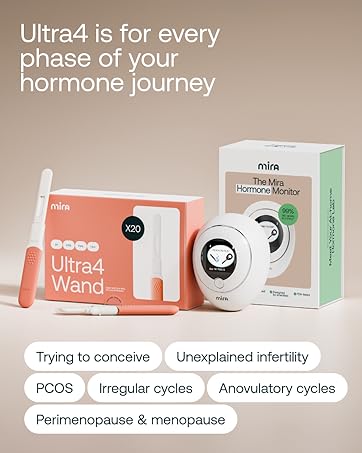
Mira gives you the ability to track your hormones every day of the month. Use code 2LYTLEMILL20 for 20% off one-time purchases.
Ready to act on your data? Download the complete HRT Readiness & Hormone Optimization Blueprint PDF for $19 to unlock exact clinical dosing schedules, printable cycle calendars, and step-by-step instructions on how to use these protocols safely.
👑 Upgrade Your Strategy: Get the Full Investigative Blueprint
Don't just read your data—let's map it. When you download the manual today, you have the exclusive opportunity to upgrade your purchase to include a Comprehensive Functional Medicine Assessment & Personal Vitamin Consult.
Instead of trying to figure out your biochemistry alone, you will step into a 1-on-1 investigative session with me. We will audit your current labs, assess your unique physiological traits, and pinpoint your exact cellular needs.
With this upgraded session, you will receive:
Your 1:1 Functional Medicine Consultation: A private, deep-dive session to translate your symptoms into an actionable recovery map.
The Complete Neuro-Apothecary & Custom Vitamin Compendium: Included directly with your session, giving you a customized, professional-grade nutrient plan hand-picked for your unique biology—saving you years of expensive trial and error.
Choose the path of aligned, educated action. Reclaim your highest energy and secure your long-term vitality.
👉 Get Your Personalized Optimization Manual & Upgrade to the Full Assessment Loop